 Caveman diet. Stone Age diet. Hunter-gatherer diet. Paleo diet. It’s the popular nutritional plan based on the presumed ancient diet of wild plants and animals that humans habitually consumed during the Paleolithic era—a period that ended around 10,000 years ago with the development of agriculture. Paleolithic nutrition is based on the premise that we modern less-hair humans are genetically adapted to the diet of our Paleolithic ancestors and since human genetics have scarcely changed, the ideal diet for our health and well-being is one that resembles a diet devoid of grains, sugars, dairy, legumes, and anything processed.
Although some claim the diet to be a another recent “fad”, it has been recommended for over 35 years, perhaps even longer. Gastroenterologist Walter L. Voegtlin was one of the first to see first-hand that following a diet similar to that of the Paleolithic era could improve a person’s health. In 1975, he published the book Stone Age Diet: Based on In-Depth Studies of Human Ecology and the Diet of Man. The dietary changes he had his patients undergo resulted in positive outcomes for common GI health problems, such as colitis, Crohn’s disease, irritable bowel syndrome, and indigestion. Since then, this nutritional concept has been promoted and adapted by a number of authors and researchers in several books and academic journals and popularized by Loren Cordain who wrote the Paleo Diet in 2002 based on his research.
The Paleolithic diet has been criticized on the grounds that it cannot be implemented on a worldwide scale. Cordain admits that if such a diet was widely adopted, it would compromise the food security of populations dependent on cereal grains for their subsistence. However, he says that where cereals are not a necessity, as in most western countries, adhering to a grain-free diet can be highly practical in terms of cutting long-term health care costs.
In the past 200 years the industrial revolution has changed our diet to an even greater degree with the introduction of processed, artificial, and genetically modified foods. Paleo proponents claim that these changes have created a detrimental effect on our health and link them to diseases of modern civilization such as obesity, diabetes, heart disease and cancer. The Paleo diet is based on eating foods that would be available to humans in the absence of all technology so as to mimic the diet of hunter-gatherer societies as much as possible.
Many foods are restricted on this diet for the reason that that they were not available to our prehistoric ancestors. These include all processed foods, sugar, salt, grains, legumes, dairy products, coffee and alcohol. Potatoes are also restricted because the varieties available now are genetically and nutritionally altered and are much higher in carbohydrates in comparison to those available in Stone Age period. Some suggest there is evidence that the diet of Stone Age humans (as early as 23,000 years ago and perhaps even as early as 200,000 years ago), did include, in some form, refined starches and grains that are excluded from the Paleolithic diet today. However, cereals and other grains are excluded from a true Paleo diet; Lucky Charms and Corn Flakes – sorry.
Paleo diets provide optimal use of the fatty acid metabolic pathways. As your body becomes more and more accustomed to a reduced carbohydrate intake, intra-muscular triglycerides stores will increase along with increased efficiency of stored fat breakdown. Liver, blood and muscle glucose stores will be more actively conserved. The net effect of all of these changes will be to keep your blood sugar levels within normal ranges during the day and during exercise; you’ll be a more efficient fat-burning animal.
Meat, poultry, fish, eggs, most vegetables, mushrooms, fruits, nuts, herbs and spices make up the majority of the diet. Insects too if you’re into that. Honey, dried fruit and natural oils are permitted in very small portions. Some say coffee is okay in small amounts too.
Some key points of a Paleo-type diet:
- Higher intakes of protein reduce appetite and increase metabolism. High protein also prevents loss of lean muscle
- Emphasizes fruit and vegetables
- High intake of essential fatty acids (omega-3 and omega-6)
- May be beneficial for dieters who have difficulty with carbohydrate cravings and blood glucose imbalances
- Protein (19–35% energy); carbohydrates (22–40% energy); fat (28–58% energy)
- 56–65% of food energy from animal foods and 36–45% from plant foods
- More than 70% of the total daily energy (calories) consumed by persons in the United States comes from dairy products, cereals, refined sugars, refined vegetable oils, and alcohol.
Some sources advise eating only lean cuts of meat, free of food additives, preferably wild game meats and grass-fed beef since they contain higher levels of omega-3 fats compared with grain-produced domestic meats. Some Paleo proponents also allow canola oil as part of the diet, (even though this was not available during that era), due to its high level of monounsaturated fats comparable to olive oil. Many also say that since salt was not part of the hunter-gatherers’ diet, it should be omitted, as our metabolism cannot handle salt very well.
My take, which has been supported by advising patients on dietary changes for almost 15 years and more recently after a week-long strict Paleo diet at the MovNat retreat, is this:
- A Paleo-type diet is a great dietary template to follow if you want to improve your health, fitness, and over-all well being, (as well as lose fat and gain muscle). Ideally I feel it should be the foundation to every person’s diet unless there are food allergy concerns.
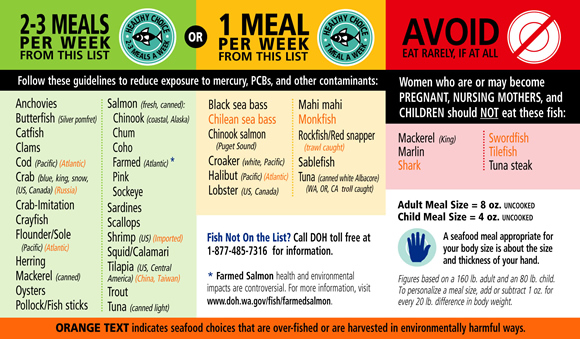
- Take it easy on the fish. Fish is not as healthy as it was back in Paleo times. There were no coal plants emitting mercury and other contaminants into our oceans, rivers, and lakes. Contaminants were much, much lower (perhaps non-existent?). Keep the fish, especially the large ones like tuna, to once a month. Smaller fish can be consumed by some individuals once a week. Check out the fish chart below.
- Ditch the canola oil. It’s not the same as olive oil. More on that here.
- Dairy fats are needed, especially butter. The arachiodonic acid (AA) is necessary for neurological development and health (even in the elderly), as well as hormone production, and even necessary to properly deal with inflammation. Though you can get these fats from red meat, it’s much harder to do, especially if you’re getting the leaner, healthier grass-fed beef.
- Salt, in the form of sea salt, should be considered, especially when sweat rates are higher – hot summer days and with prolonged exercise. Healthy diets, devoid of canned food and fast food (where most humans get their salt), can often be deficient in sodium chloride.
- How about grains and other starches? That should depend on your exercise rate and how you feel eating them. Sweet potatoes and possibly even regular potatoes may be advised if you feel you metabolize them well. You can certainly be very healthy without these in your diet, and they should not be consumed every day. Corn, rice, and other non-gluten containing foods should be based off your individual need and preference. Though you can’t call yourself a true Caveman or Cavewoman, pay attention to how you feel when you eat a certain food.
Adjust the diet to your individual needs and habits. More calories should come from fats (avocadoes, eggs, nuts, seeds, coconut, butter) and less from carbohydrates (fruits, potatoes, honey) if your exercise levels are low. The opposite holds true if exercise is more intense and of long duration. More on specific guidelines at the SockDoc site here, (last two paragraphs).
Off you go to eat your meat and veges.


Hmm. A very large percentage of the planet does not eat dairy fat (i.e. the Chinese)
It’s a valid point Paul, but I’m going by what I see in my office. Change a kid from skim milk to whole milk – concentration and health improves. Adults too – I have seen amazing things after a person starts using butter. Definitely not saying guzzle milk (which ideally should be raw if you can get it).
Now perhaps in China this would be different. Take for example, iodine and Japan. Supposedly Japanese people get 10-15mg of iodine a day from their diet and just breathing the air around them. Yet, give an American that dose for even a few days, most would be toxic.
I’ve got an email out to my patient living in Beijing. Let’s see what they eat in regards to saturated fats (red meat, dairy, shellfish).
what are your thoughts on Almond flour? Is it a nut and its okay? or is it processed and not okay? One of the recipes is Almond pancakes made from the almond flour. And what’s up with Coconut flour? Are either of these any good? Thanks!
Hi Christy, I’ll be the first to admit that I’m not a Paleo expert because I know there are many out there who may have another view on exactly what Paleo is, and isn’t. But first things first – I think that a person should be viewing this is a Paleo-Type diet, and that can vary to some degree from person to person, book to book. So are almonds and coconut good and also Paleo? Definitely yes. But when you mill them into a flour are they just as Paleo? I’d say not as good but that doesn’t mean you should stay away from them entirely. Whenever you crack open a nut, like an almond, you’re going to oxidize some of those omega-6 fats so the flour is not as good as the actual raw nut (BTW you should try to get almonds that are not pasteurized – most unfortunately are). Coconut oils don’t oxidize as easily because they’re mostly saturated fat. But also most importantly, go with how you feel. If you don’t get bloated, tired, & foggy brain from eating those flours, and you generally feel good like you do as when you eat other Paleo-type foods, then go for it.
Almond flour is another name for almond meal, which is basically milled almonds. Per 28g serving, Bob’s Red Mill variety is 75% calories from 14g fat, with 6g of protein, and only 1g sugar (6g carbs total). Sounds like a paleo/keto winner to me! Oils are oxidized (broken down, ruined, toxic) in processing, and occurs more the longer they are exposed to air and heat. You will get better shelf life if it is sealed and chilled. However, for best baking results, I suggest milling it fresh at home. I use a cheap, simple coffee or spice grinder to create flours from seeds and nuts. I find that flax meal has a similar flavor and texture to wheat AP, with great omega 3/6 levels.
Coconut, on the other hand, doesn’t appear to have as favorable a profile. The same weight (28g) has 8g of carbs, about a third of carb content in white flour. Most is fiber, but it still has 2g sugar, twice what almond meal has. The main drawback is that it doesn’t contain any of that delicious coconut fat that is so healthy, but I might still mix it into my GF baking for flavor/texture.
Remember Paleo doesn’t mean “low to no carbs” so you can’t compare the carbs between almond and coconut and say one is better than the other based off carbs including naturally occurring sugars.
For kids you may have a point but they are undergoing huge growth with massive changes.
For us post 50 crowd the problem is to avoid…um..growth ;)
I have shied away from dairy fat for the last 4 years and don’t really notice any problems except I’m 50lbs lighter and I feel a hell of a lot better..not a very controlled experiment though.
Most Chinese don’t get much red meat either, it’s all pork and chicken and shrimp. And I assure you, their cognition is just fine. ;)
I think there is probably a very big genetic component and/or acclimation issues to the ‘badness/goodness’ in a lot of foods. The kids you see NEED the dairy fat, but a chinese kid just doesn’t.
The amount of exercise undoubtedly figures in too…an 1800’s era Eskimo could eat nothing but saturated fat and protein all day long but If I tried that I would feel like crap in a week.
Its amazing how poorly this stuff is understood.
Exactly Paul, it’s all individualized and does even need to change based off age and activity level. Yes, those fats are needed a lot more in kids than adults, though I see adults who needs them too – maybe a dozen a year. Perhaps the Chinese get those fats from all the pork and shrimp? And yes, genetics definitely play a role I’m sure. Although I’ve seen many different nationalities, I’ve never seen a Chinese person!
I think respondent Paul has a point. Presumably, before most foods were domesticated, they were consumed through hunting and gathering. How would one think to plant the seeds of something without already knowing that it’s comestible? So perhaps populations that have evolved in and around areas where grains are endogenous have a greater genetic ability to properly digest them. I know the indigenous peoples of Minnesota harvested wild rice before the Europeans showed up (of course, they themselves are late Paleolithic arrivals to the New World). Perhaps wild rice has been harvested even longer on the Eurasian continent. In other words, regional variations in available comestibles could influence gene selection and thus regional variations in tolerances to exogenous plants. Modern humans left Africa some 60-80,000 years ago, so I wonder how long would be needed to adapt. Is there any literature from evolutionary biology that suggests how long digestive systems would take to adapt to new diets? I would think the rate of evolution would be much quicker than for skeletal-musculature systems, and yet these latter have only been fully modern for some 200,000 years.
Anyway, even though I’m a bit skeptical of Paleo Diet advocates’ reconstruction of paleolithic life (after all, there is plenty of documentation of hunter-gatherers in the (neolithic) ethnographic record, so why not generalize about what those people eat/ate?), I don’t have the biological knowledge to evaluate most of the evidence you present in favor of it. Your account is very convincing, I like your frame of “Paleo-type diet,” and would like to try cutting out all or most grains from my diet (that’s the main difference between my present diet and the Paleo) to see how I feel. Nonetheless, if you have a minute, I’d be interesting in hearing your opinion about what Andrew Weil claims are some of the drawbacks to the Paleo diet:
http://www.drweil.com/drw/u/QAA36527/eat-like-a-caveman-paleolithic-diet.html
Also, I like to have an espresso when I wake up, and another after lunch. I also enjoy a glass or two of wine with dinner. Should these habits be of concern?
Finally, what’s your take on the anti-vaccine movement that informs some of the natural lifestyle sites and literature out there?
Thanks for your time and consideration, Erik
Hi Erik, to answer your questions
The Weil link does not work, and I’m happy to read it although personally I don’t find much knowledge in his teachings.
Espresso and wine are okay for some, not for others. That’s 100% individualized unless you need espresso to give you energy and/or wine to help you wind down at night. Then you’re using them as drugs. Also, I believe any dietary “habit” should be a concern. You should not be eating the same thing every day as a habit.
For vaccine info you can check out my KIDS section. Plenty of info there and also blog posts from the years’ past regarding the flu shot.
Wow, looks like Weil deleted the link. Oh well. Thanks for your reply in any case. I did end up reading your stuff on vaccines after posting the above. Seems like my espresso and wine ‘habits’ are within normal limits; I was more concerned about health affects, and you answered that. Thanks.
Hey Dr G-
What is all the hype around Chia Seeds? Are they really the super-food everyone says? And is it good for you? And if so, what is the best way to consume and get all the benefits and how much daily?
Thanks!
The hype comes from the Mexican runners profiled in the book Born To Run using them as a fuel source. They’re high in omega 3 fats (like flax seeds) and contain some healthy levels of trace minerals. So yeah, if you like them they’re good for you. As with anything that contains omega 3s – light and heat destroys the oil, so you want to eat them as close to their raw form as possible. Enjoy!
Thanks for the wealth of information you have on your site. You are an amazing Doctor. The best. Feeling improved health from following your healthy eating program for carbohydrate intolerance and reading my way through your website. Its a shame that the GP’s in the UK not have the time to give us the guidance that you offer us. Still you are the answer to what we lack.
Thanks so much Karen!
Dr. John Briffa in the UK is an excellent source of information. I’m a longtime Dr. Gangemi fan but I also appreciate other enlightened physicians. I’ve lost 145 pounds switching from 60 years of vegetarianism to a meat/fat/spices/water regimen.
Your website was so informative and helpful. I had been feeling really guilty at following the ‘Eat Fat and Grow Slim’ food regime of Dr.Richard Mckarnass because of the high protein content, but it appears that unknowingly I had hit upon the ideal resolution to my problems. I have previously been on the raw food diet which also resolved a lot of my diffs but didn’t supply sufficient energy. I’ll certainly endeavour to include butter in my diet – I believe Ghee contains even less milk than ordinary butter.
Thanks so much for the reassurance that I’m not so alone as I thought.
New to your website, Dr. Gangemi – is it okay to eat canned meats such as chicken, salmon and tuna.
Easy on the canned food, especially tuna which is loaded with mercury (salmon too).
Hi Doc, what’s your opinion about the Blood Type and Geno Type diets from Peter J.D’Adamo ?
I commented on this somewhere before – basically I think the diet idea is okay but I feel that it works because of the general principles of taking a person off unhealthy food and getting them to eat better – not necessarily the individual blood type plans.
but as D’Adamo points out, your blood (and gene) type pretty much indicates what is healthy for you and what is not.
Yes but there are general healthy principles such as no HFCS, no trans fats, no artificial foods, etc…I think those have more of an impact than saying “this blood type can’t eat chicken” for example.
Yes I agree with you. I personally think that although there are certain foods one might have to avoid because of his or her genetics, the general principles are universal no matter who you are or what your blood type is.
Hi Dr Gangemi,
I have spent alot of time reading all I can on your site. I have alot of stomach issues, I get a stomach ache sometimes everyday and at least 4 times a week and alot of headaches too, I never eat fruit and hardly any veggies because I immediately get a stomach ache. Many veggies just about do me in. How do I do this diet when I have such a hard time with veggies?
If I eat sugar, I binge…I can’t stop. I eat more and more until I am sick!
I battle with my weight constantly and the older I get the harder it is. I am 51 now. I workout at least 4 times a week.
I have done every diet known to mankind I think! I felt the best doing Suzanne Somers and Atkins and had lost about 30 pounds following that way of eating.
I need to lose about 25 pounds right now. My brother eats Paleo way and loves it. How important is it to eat grass fed beef and chicken? Do I really have to do that? It is so much more expensive.
Also what are your thoughts on Pork Rinds?
Also, where can I find the actual diet to follow? Do you have a printout or a book I should buy? Foods to eat and not to eat?
How much should I be eating?
Thank you….I know I hit you with alot!
Sorry I can’t give such personalized information – if I did I’d be on this computer even longer than what I already should be. The info here is the “actual diet” BTW. :)
Can I just ask then if you think pork rinds are ok?
They’re typically fried and that would be very bad.
Oh wow…I thought they would be ok. On Atkins they are, and they do have zero carbs and I thought oil was ok?
A Paleo Diet is not Atkins. A Paleo Diet is not “low carb”.
“Oil” is only okay if it is organic lard, extra virgin olive oil, coconut oil, or butter.
Ok…thank you for your help
Dr. Gangemi after reading this article I get what foods to be eating, but I’m a bit lost on what you drink with this diet? Would that be solely water and tea? If that is the case even while eating butter where do you get your calcium from? You mentioned, “a diet devoid of grains, sugars, [dairy], legumes, and anything processed.”
Yes water and tea is fine too. Don’t buy into the milk=calcium scheme. Although milk does have calcium it is not very well absorbed and there are plenty of other high calcium foods (green veges, oranges) that have a higher percentage of calcium that a human can absorb. And humans don’t need 1,000mg+ of Ca a day like the dairy association has led you to believe.
Hi Dr Gangemi,
Is tofu a permitted food in this kind of diet?
Definitely no soy.
Hi Dr Gangemi,
How do I eat paleo if I’m a vegetarian?
Thanks, Laurie
You don’t :) Read this over at Sock-Doc: http://sock-doc.com/2012/11/vegan-athlete/
Helllo Dr. Gangemi,
I think I’ve almost read your entire website. Amazing information. Thank you!
Your article regarding free t3 was very helpful. I wonder if you would think a liver cleanse would be a good protocol for low t3?
Thank you so much!
Jennifer
I have never recommended a cleanse for a t3 issue.
Hey Soc Doc,
I’ve been reading Dr. Maffetone’s book that you recommended. For about a month now, I’ve been implementing no sugar, no refined carbs, more meats, lots of fruits and veggies.
However, my stomach’s been hurting. It intensifies when I eat or drink. Surely this whole foods diet can’t be the cause?
What are possible causes of stomach pain like this?
Maybe a certain vege or fruit you’re reacting to? Sugar in the fruit or roughage in the veges?
I started the 2 week test a couple of days ago. I’ll see if it helps and go from there to find out what’s bothering me. Thanks! It already seems to be a bit better.
Supporters of the Paleo Diet also think that you should avoid all processed fats, such as vegetable oil, soybean oil and margarine. This is because they are not whole foods and have been shown to contribute to heart disease. However, they do approve of several types of oil, including flaxseed, walnut, macadamia, avocado, olive and coconut. Most sugar is also limited.
Dear Doc,
I am still confused about “too-much-protein” case. Some doctors are saying that if you take more protein, that can effect your liver, and also can be transformed to sugar, who can provoke insulin and stop ketosis, aka, you are stopping loosing fett. Some paleo/lchf nutritionist suggest to not take so much protein, if I can’t see the result of loosing weight form this way of eating (what is happening to me, btw – taking more then 120gr or about 60gr, doesn’t matter).
What is true about protein??
It’s very individualized. I typically recommend 1.5-2.0 grams of protein per kg bodyweight. I don’t think people need to, or should often stay in, ketosis.
Hi Dr. Gangemi,
Please, can you help me?
I think I might be sensitive to salt. I crave it all the time. I love potato chips. The other day I had 1 tsp of epsom salts in a glass of water to help with constipation. Then I noticed that I started itching all over my body, it starts inside my left arm, then outside my throat around the thyroid area, on to my scalp, and all over the rest of my body. When I scratch my scalp there are bumps, my scalp is very dry and feel tight, my hair is falling out, then i notice a rash on the inside of my arm, anywhere else on my body there are raised welts on my skin that sometimes start to bleed. I have to take Benedryl every night to help with the itch and to help with sleep issues. Benedryl does help, does this mean that I will have to take a antihistamine for always?
What can a lactose intolerant paleo diet follower eat to keep her weight up? I’m trying a low FODMAPS diet for SIBO and I’m getting quite anorexic. Before I started GI issues in early 2016 I ate a diverse diet (I was not lactose intolerant then) and in big quantities (large appetite) to maintain my slim figure (58 kgs in a 5 ft 7 frame). Now I’m struggling to stop my weight from falling below 50. I am a 51 year old female, still always hungry and very depressed at her ongoing issues of belching, gurgling stomach, unformed stool and occasional heartburn.
Plenty of other proteins (meat and eggs), fats (fish, eggs, coconut oil, even lactose-free dairy like heavy cream), and of course starchy carbs like sweet potatoes and plantains.