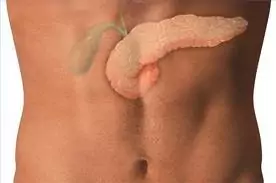
 Gallbladder problems including gallbladder attacks are very common reasons for which people seek medical care. The pain and discomfort can unfortunately result in the removal of the little green organ followed by dietary restrictions (often low fat). But of course, all of our organs are there for one reason or another and although we can live without the gallbladder, removing it is simply removing a symptom of a problem, not the actual cause. In this two-part article on the gallbladder I’ll discuss why you have a gallbladder, why you should want to keep it (and keep it healthy), warning signs that your gallbladder isn’t working well, risk factors, and natural treatments and lifestyle changes you can make to improve your gallbladder and overall health; yeah! If I can just save one more gallbladder I’ll be a happy guy.
Gallbladder Physiology: Bile is so Good for You
Let’s take a brief lesson in gallbladder physiology here, and I’ll make it interesting and relevant to your everyday health. The gallbladder is a small organ that sits tucked up underneath the liver in the upper right side of your abdomen. It concentrates and stores bile produced by the liver, and along with the enzyme lipase secreted by the pancreas, it aids in the digestion of fats in the gut. When fats from food enter the digestive tract they stimulate the secretion of a type of hormone called cholecystokinin (CCK) in the upper part of the small intestine – the duodenum. This, along with the stomach’s secretion of hydrochloric acid, signals the gallbladder to release some of its approximately 50mL of bile into the gut to help aid in digestion of those fats. Since by most, it’s viewed as a “storage tank” and nothing more, it’s often seen as only a nuisance when it comes to digestive problems and pain – expendable at the first sight of problems and removable with surgical ease. But there’s so much more to it than just storage.
Bile is a lovely dark green/yellow-brown fluid and contains about 10% bile salts. The bile acids (salts) have a strong relationship to hormonal regulation as they share many of the same synthesis pathways as hormones. This is why people with hormonal problems, especially women with estrogen dominance, are more susceptible to gallbladder problems. The more hormonal stress on the body the lower the bile acids which in turn disrupts normal hormonal metabolism. It’s not a coincidence that many women have their gallbladder removed at the same time they have a hysterectomy.
Speaking of hormones, just a few years ago it was demonstrated that the gallbladder also plays a role in insulin regulation and that β-like cells that produce insulin in the pancreas also occur in the gallbladder. Insulin is also metabolized by the liver and can therefore have an effect on the bile salts – so diets high in refined carbohydrates and those with insulin resistance will also be more likely to have troubles with their gallbladder.
Bile also increases the absorption of fats and especially the fat soluble vitamins A, D, E, and K. We all know the push for vitamin D by every doctor and health food store today. Consider that if you have an unhealthy gallbladder then your absorption of vitamin D, as well as the other fat soluble vitamins necessary for good health, will also be impaired. So just because your vitamin D level may be low as revealed by a blood test, doesn’t mean you should go vitamin D supplement-crazy; that’s not necessarily addressing the problem.
Bile and Cholesterol
A small percentage of bile is cholesterol but the majority of bile acid is made from cholesterol; actually about half of the cholesterol our body makes per day is used to make bile acid. These bile acids are recycled from the intestines and back to the liver and gallbladder. However if there are problems with digestion, such as an all-too-common poor diet, then the salts can become “dirty” – the bile becomes thick like a vehicle’s oil that is way past the oil change date.
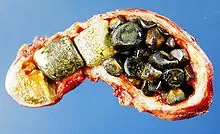
Eventually this thick, dirty bile can accumulate and form a gallstone, also known as a cholelithiasis. Usually these stones contain some or a significant amount of cholesterol, so it’s often cholesterol that gets blamed for causing the stones when really it’s an issue with oxidative stress, inflammation, and digestive problems caused by other factors, (discussed in a bit). Gallstones in the gallbladder can lead to cholecystitis, which is an inflammatory condition of the gallbladder. The stones leaving the gallbladder can also obstruct the bile ducts which can be life threatening, especially if a stone blocks the pancreatic duct leading to pancreatitis.
Also, low levels of bile salts can be a reason for gallstones; this problem would ultimately fall on a production problem with the liver.
Should You Remove Your Gallbladder – You Don’t Need it Anyway (?)
The surgical removal of the gallbladder is called a cholecystectomy. This is a common procedure that with rare exception, is unnecessary and does not address the problem. Some people who have had their gallbladder removed will see absolutely no change in their symptoms while others may have their symptoms 100% resolved. Others who have had a cholecystectomy may no longer be able to eat high fat foods as their body is unable to handle too much fat digestion at once due to the removal of their bile storage tank. However, the body in its infinite wisdom can often form a new little storage pouch in the area of the common bile duct to store some bile for when it’s needed.
So how do you know if your gallbladder is at the point of becoming a life threatening emergency or you’re simply experiencing gallbladder troubles that perhaps can be dealt with in a non-surgical manner? Well, without giving specific medical advice for every situation, a good rule is to look at the severity of the signs and symptoms. Someone who is having a gallstone attack typically has pain in the upper right side of the abdomen and/or pain in-between the shoulder blades, more often below the right shoulder. It’s uncomfortable and can get to the point of being very painful. Sometimes nausea and vomiting can occur which can last for minutes to hours. Now if the pain and vomiting get worse and worse then you should of course seek medical attention. (Gallbladder attacks and heart attacks can have very similar symptoms – heart attacks don’t always have pain down the left arm only.) Typically gallbladder attacks don’t just come out of nowhere where the person never had any symptoms of a gallbladder problem and now all of a sudden they have a huge stone lodged in their bile duct. So you have to know the symptoms of poor gallbladder function so you can address the issue before it gets too out of hand.

When Your Gallbladder Isn’t Working Too Well – Gallbladder Referred Pain – Signs & Symptoms
There are many signs and symptoms of a gallbladder that isn’t functioning very well and most people just think they’re common “normal” symptoms so they think nothing more of it. Then, “all of a sudden” they get a major gallbladder attack and are puzzled as to how it could have happened to them. Well, I’m hopefully going to keep you from being surprised!
- Constipation, actually gallbladder constipation. Yes, a major reason for constipation is a poorly functioning gallbladder. When fat enters the small intestine it has to be metabolized by those bile salts and the lipase from the pancreas; (you learned this already, right?). But if the bile isn’t released efficiently from the gallbladder then the food and its fatty contents must wait longer and longer in the small intestine to be metabolized. So they wait. And wait. And wait. And you get constipated. So don’t necessarily think that you need more fiber, or you need probiotics if you’re constipated – consider your gallbladder.
- Aside from constipation and the gallbladder referred pain areas discussed (upper right abdomen and right shoulder area), another symptom of an unhappy gallbladder is burping after or while eating a meal – especially one containing fat. Typically this person will also feel “heavy” and even perhaps bloated if they’re having problems digesting a fatty meal because their gallbladder isn’t doing its job. Burping can be from eating too quickly too but burping from a gallbladder problem usually accompanies heaviness.
- Another symptom of a gallbladder issue is peeling of the skin on the palms of the hands and the soles of the feet. This is due to an inefficient fat metabolism system as well as metabolism problems with vitamin A (fat soluble). I’ve seen patients present with some pretty wild looking palm and sole peeling that nobody was ever able to understand why. This too, is often a gallbladder problem.

 Finally, and I discuss this in my articles on sleep, the horary time (acupuncture meridian) for the gallbladder is 11pm to 1am. So if you can’t fall asleep until after 1am or if you’re asleep before 11pm but then awaken between 11pm-1am it could very well mean your gallbladder is stressed. Also note that liver is next, from 1-3am, and this is the most common time a person has sleep difficulties for many, many reasons – caffeine, hormones, stress, medications – just to name a few, and all these can also affect the gallbladder too as well as bile production in the liver.
In Part II of Gallbladder Health I’ll discuss how to prevent problems with your gallbladder as well as natural treatments for optimum function of your gallbladder PLUS emergency help to calm down or resolve a gallbladder crisis.


I am speechless…all I can say is bravo! This is an amazing site. I have been seated in one position for hours reading. Thank you, Thank you, Thank you. You are by far one of the most informative and wise Dr.’s I have come accross in awhile. Please continue I truely believe you are helping many, many lives.
Thank you!
I am so glad I find you site after my GI came back with H. Pylori infection in my gut. I am shocked because I don’t have ulcer or many uncomfortable symptoms like many people do and I don’t take any medicine at all. But I do feel my right arm and back have some cramps and I thought because too many typing on computer. After I read your article I do think I have some gall bladder unhappy issue but I think is it because I have H. Pylori in stomach? After many research and read some of successful stories to eradicate the bacteria, I asked the medical stuffs to try nature way for couple of months first they got upset with me. I am so afraid of the antibiotic –prevpac to screw up my whole digestion systems, I really wish you practice close by our area! What shall I do?
Sorry I can’t advise on-line. I can tell you that H.Pylori is, like most infections, opportunistic. So it’s there because of other problems. Typically low stomach acid allows H.Pylori to grow, and as you know from reading these articles, stomach acid (HCL) can also result in gallbladder problems (the low acid doesn’t trigger the gallbladder to release the bile).
I had a h-pylori a few weeks ago. I had my gallbladder take out today !!!!
My husband was just told that his gallbladder is only functioning at 18% and should consider having it removed. He’s not having pain when he eats, but he does have horrid indigestion and is on prilosec. his symptoms, are just not feeling well, no energy, no get-up-and-go. which is not like him at all.
I guess the question is, will removing the gallbladder fix this, or is there something else going on?
You never know if it “fixes” the problem until after it is removed. Many improve, many don’t, some get worse. Removing the organ, as I say in the article, is not addressing the problem, but dealing with the symptom. In rare cases it does need to be removed (too much damage/inflammation); if he’s interested in keeping it then he needs to find a doc who treats this naturally.
Who can you refer me to for treatment of my gallbladder ? I have gallstones I am a 63 yr old female who would rather be treated by a professional who qualifies in this field rather then a Surgeon removing my gallblader. Please help me find a doctor who is able to treat me and no surgery i live in vineland new jersey zip code 08360.please help
Thank you so much for the response, it seems already address my problem too.
I have started to take natural remedy from last week, amazingly my body cramp is gone and feel good.But I know it doesn’t mean I don’t have the bacteria anymore…Besides taking L.Glultamine, mastic gum, broccolive,oil of oregano, probiotic,…..which all claims to either kill or inhibit h.pylori…also I change diet from grain and less fat diet (my bad- I use grapeseed oil too, I though they are good) to more good fat diet and cut carb almost completely in order to kill bacteria), more weigh work-out.
May I ask …have you had pylori patient before? If I can’t reach you since I live in Plano, Texas; can you refer Dr. around my area who can monitor my case? Thank you again!
I have seen many patients with h.phylori. I don’t use the antibiotics though some may need them. Really needs to be case-by-case.
Sorry I don’t know anyone in Plano.
Thank you, Doc!! Wish one day you will publish an article about H.phylori here. I may try to see if I can get in line with your consultation service, it seems the waiting list is pretty long, anyway…. Thank you again to put these valuable articles in website to teach us!!
Consult is 2 months wait. Office visit currently 8 months.
I’ve had problems all my life with constipation and with all the symptoms that you describe with the gallbladder issues. I remember as a child (5 years old) I would have to take medicine to make me not have constipation and a few years ago after the hospital didn’t listen to me that I was have problems with my appendix and they just pushed it off as a “woman” problem, I had to go back a few days later by ambulance to get gutted and was sent home with my stomach wide open to heal from the inside out, now my point is they let me know that I had two large gallstones. I have always had problems with my stomach/back hurting and my primary care physician never even looked into it because I have severe hypertension. So that problem needed be looked into first. (born with it) Now I get violently ill when using the restroom and I will go (one time) up to 6 days without being able to go at all. The pain is unbearable but somehow I make it through. My question is: After so many days of have constipation there is a mucus film on my bowel is this common when having issue with the gallbladder? Thank you for you time! I really appreciate it!
Common – but not normal. Most likely from widespread gut inflammation.
Angie,
Clearly you have been let down by western medicine, do yourself a favor and seek help through a holistic doctor. You will be pleasently surprised.
Really enlightening! Unfortunately, I have not heard this advice from any other doctor here in the states. I ended up taking homeopathic remedies from a physician in Oman. They worked! I eat almost all foods except those with caffeine and high fat or fried. (Sometimes I do have those but very rarely.) And I still have my gall bladder!
Dear Doc,I have many of the symptoms in your article about the gallbladder .This is been going on for about 8 months.No sharp pains though.Starting Medicare March 1 and waiting till then to do something about it. Went to my doc about another issue last week and talked a little about what was going on.He said he would line me up for a sonogram first then go from there.He sounded like removal if there was a problem. I,ll keep up with your suggestions and talk to him about them .Your name will not be used. Thanks Robert.
TELL ME IF NAUSEA IS PRESENT IF YOUR GALLBLADDER IS DISEASED.I FEEL PRETTY GOOD IF I DON’T EAT THINGS LIKE MAYONAISE, FRIED FOODS.DRINK CAFEINE.. i AM ALSO HAVE DIABETES AND REFLUX. WHAT DO YOU THINK?
THANKS MARILYN
Nausea can be a sign of a gallbladder problem, but it can mean other things too.
I had a gall bladder attack recently, and unlike the one I had almost two years ago this one was NOT followed by daily pain that was barely relieved with low fat foods and pain medication. Instead, this time around when I eat small lowfat meals such as papaya and veggie soup with brown rice at times and avacados too, for example, I feel pressure like my food is having a hard time going down. I also feel it in my throat too. Its not painful, but its uncomfortable and i find myself burping a lot. I have no problems using the restroom and I didnt feel this way before. Im baffled as to what it could be. Could this be an after effect from the attack? Will it go away soon? Also, if its a digestive issue brought upon by the attack, could enzyme pills safely help get me back to normal?
Thanks so much for your article! Blessed I came across it
Could be the affect of insulin on your gallbladder. You might remove any offender until the GB settles down. Personally I don’t use enzymes other than betaine HCL sometimes.
Insulin in the gallbladder? Is that a good or bad thing? For how long? Im doing a little better now-eating small meals.
Thank you so much for responding btw!
Not good; it’s explained in the articles.
My problem is the feeling of wanting to burp but you can’t burp! That is accompanied with a pain in the upper right shoulder blade, and then when you finally are able to burp really big, that pain in the shoulder is gone. No nausea , no constipation, no diarrhea……..some days worse than others with the burping and back pain.
This was so helpful. I had my first attack last night and went to the ER. How can I get to part II if this information. Thank you again!!
https://drgangemi.com/2012/08/gallbladder-health-prevention-treatment/
Dr.Gangemi,
My daughter’s boyfriend, who is 19, has had his gallbladder out. A low fat diet is best, but as 19 year old boys are wanting to eat the occasional high fat burger or plate of biscuits and gravy…he suffers after. Is there anything he can do (yes, we know AVOID is best!) that can help the digestion process of the occasional high fat treats?
Follow the advice I give in Part II.
Hello Sir, I have read above part but i’m unable to understand because i am from Enginnering background.
I Have a Question?
One month before my Mother( age 42) had undergone Nephrectomy(Right Kidney Removal) due to Frequent Urine Problem. During that Surgery Doctor came to my Father & said that Gall Bladder is attached to the Kidney So they have to remove it. As Doctor Recommended it , My father said Ok.
After 2-3 weeks of surgery my Mother is slowly recovering , but she feels pain in back side during night. When i approached the Doctro he said it’s not a problem ? Is that Right.
I googled some sites in that Gall Bladder may form again after 6-7 months after removal. Is that Right ?
What is Purpose of Gall Bladder and what is diet should be taken if it is removed ? Any Medications or any Care should it be taken ? As my Dr. Says nothing is required ?
My Mother still suffering from frequent urination during nights( more than 10 times) .What should i Do ? Please Respond me Sir DR.GANGEMI
Please read Part II – most of your questions can be answered there. Thank you.
Awesome article!!! I have gallstones and dont want my gallbladder taken out but I need help big time
First of all, thank you for the wonderfully informative article!
I’ve had gallbladder pain for over a year now, but only recently found out that is what it was. The ultrasound showed no stones, but the HIDA showed a lower empty rate than normal. My doctor isn’t pushing the gallbladder removal which is nice. I want to be trying for children sometime in the nearish future, and am concerned about potential problems during pregnancy. I have already spoken to my OBGYN and have a call into my GI doctor, but I found your site am interested in any suggestions you may have for a healthy gallbladder during pregnancy.
I am vegetarian aside from eating fish so my diet consists of mainly fruit & veggies, fish, rice/grains, beans, eggs, dairy, some soy products, and the occasional chocolate indulgence. I am 31 years old with an average weight and have a light-moderate exercise routine about 3x/week for 30-45 minutes. I have cut out caffiene and alcohol from my diet, which seems to have helped some. With all of the above, I still have relatively frequent uper right quadrant pain (at night and in the mornings), with increasing frequency around my periods. On average do women with gallblader problems before pregnancy have more issues during pregnancy and is there a pregnancy safe way to treat the pain?
Thank you for you time!
This is not uncommon with vegetarians, as you may have learned from reading the articles. Insulin issues are a big culprit with the gallbladder, which is common in low protein – high grain diets. Though it’s good you’re eating some fish & eggs. Something to consider, or reconsider, is your diet.
I had a HIDA scan 2 weeks ago; my gall bladder has an EF of approximately 2.2%. I am scheduled to have my gall bladder removed next week. I have had ALL of the symptoms but no stones or cholecystitis. I do have, and have had, persistent right upper quadrant pain, that radiates to my right middle back below my shoulder blade, for 6 months now. I found this information to be very helpful. Thank you!
Gudday sir, thank you very more for this very lecture i once sourced for.sir i am currently surfring from gallbladder infection for almost one year.and i was immediately told to remove by my doctor and a little beat scare and believing there is an alternative,though i still observes pains.sir how would i go about it.
For someone in your situation I’d advise you seek some holistic practitioner who deals with these cases, if you’re interested in trying to keep your gallbladder.
I have been having acid reflux. Burping after eating, and I do have alot of gallstones. However no one has described my other issue. The pain is severe. It starts pit of my stomach, then goes up way up into my jaw and head. It sort of feels like brain freeze, like when u eat or drink something too cold, only much much worse. I have had several attacks. One lasting the entire night. But no one has mentioned that. So to your knowledge has anyone ever complained of this?
I’ve heard that once or twice, not common. Usually something digestive going on. I recently saw a woman who had headaches only when she drank cooler than room temperature water. I had to do several things to correct it; there is typically not one specific problem resulting in the symptom.
i had an ultra sound and blood test the results came back everything normal no stones but i’m in pain under my right rib and my right side of my back is this some sort of gall bladder problem i don’t have any of the symptoms you’ve mentioned in part 1. My doctor wants me to have a CT scan but i am reluctant due to the excessive radiation. My doctor put me on Gaviscon liquid and Somac twice a day i don’t know if it’s working or not yet. I am drinking straight squeezed lemon juice with a little water all day, that seems to help What can i do to alleviate this pain. I am a diabetic and take Diabex XR Diamicron and Actos my doctor is sending me to a Diabetic Specialist who wants to put me on Insulin
I had a hidascan and was told that my gallbladder has a 6% infarction rate. I’ve consulted with a surgeon who said it’s up to me whether or not I have surgery. I do the olive oil cleanse when I have back pain and/or constipation. The last time I did it though I saw no stones and mostly no sand. A CT scan and ultrasound said I have no stones. I’d prefer to keep my gallbladder but am concerned about what’s becoming persistent constipation and don’t know if there is a supplement that could help to address that as an alternative to the flush/cleanse.
Hi, I have been getting pain that runs from my loser back up my shoulder and into my head, especially when I burp after eating or drinking anything. Could this be a gull bladder issue? I also have lap band.
I’m so happy I read this article and hope many will find it and read it as well ,I’ve had constipation issues for over the last year along with insomnia,heartburn,nausea and many other issues .all drs I went to told me it could not be my gallbladder and that I have ibs so keep eating tons of fiber and gave me prescribed medicine which made me worse also they kept me on laxatives which just made me vomit it was terrible until a year later I found a Dr sho listened gave me a hida scan and there it was a bad functioning gallbladder.I was so relieved that to know I’m not crazy and to let people know if your constipated gallbladder can be a problem.the more fiber I ate the worse it became ,so do not let any Dr tell you constipation isn’t a sign of abnormal gallbladder
My husband has been having HORRIBLE pain in his right stomach, side and back. he was diagnosed with H pylori as well but after 14 days of treatment he is hurting again and it appears to be after meals. He has been consistent of the hurting from 11-1. he went for an ultrasound today and was told he didn’t have gall stones but his gallbladder wasn’t functioning as it was a lot smaller than the size it’s supposed to be. He will be having another test to determine the function. But does the pain he’s having sound like the pain from a low functioning ballbladder?
That’s impossible for me to say w/o seeing him. Often there is not just one digestive problem. In other words, if you have a stomach problem you will affect the gallbladder and in turn the digestive tract.
Wow I had my gall bladder removed over 16 years ago and now I’m in big trouble constantly wake at 11pm usually with a racing heart which I expect is my gall bladder meridian looking for my gall bladder, have had weird symptoms ranging from full head rush to uncontrollable shaking to a chill through my back every night. Now find out I have a cyst on my pancreas that needs a biopsy. Hashimoto disease also. This is a very interesting forum was searching ways to calm this meridian will look for further info on this.
I have gallstones but am trying to deal with them naturally by diet change [low carb], supplements, etc. I am trying ox bile but it seems that bile is not released until fats go into the small intestines, so would taking ox bile with the meal do anything to help digestion or not? Would HCL be a better choice? Good article!
I use bile salts and HCL based upon what my patients show a need for. They both have their place at certain times and circumstances.
My 17 year old daughter went to the doctor, and she was told she had a gallbladder infection. She was told that she is drinking too much water and had too much alkaline in her system. She is currently constipated, and we don’t know what to do. She was given antibiotics and a medicine to help with nausea. Should she go back to the doctor? She just went a couple of days ago. I am just worried, because she can not have a bm.
I can’t personally advise you there but you might want to get a second opinion. I’ve never heard of too much water causing gallbladder problems. Look for a holistic physician who can help you figure this out.
Hi Doctor –
I’ve been experiencing a bitter taste and tingling sensation on my tongue and at times a sticky mouth for the last 4 months. It typically starts after I eat. I’ve had blood tests/endoscopy/ultra sound/allergy tests done and came back with nothing. I was referred to a list of doctors and no results. Do you think it could be gallbladder / glucose related or some bacteria/yeast? I’ve also experienced bloating/gas and inconsistent stools and hives. I’ve been taking gut supporting natural supplements and I was able to get rid of the hives. No luck with sour taste/tongue. Please let me know your thoughts.
Thank you!
Find yourself a holistic doc – perhaps a chiropractor, acupuncturist, or naturopath – to help you with those issues.
Doc I really wish I could get to you withy problem,I had h-pylori bacteria and was treated, they did a stool test after the treatment and the result was negative, I am having a Long standing stomach problem which gets worse with pain and bloat, its to the upper right side of my stomach and then into my back, it makes me so uncomfortable sometimes I feel like I’m gonna die my stomach just feel full when I eat the least and the pain is even worse whenever I take deep breath , I’m so stressed out because of this, please can u advise me, I’m 38 years old,,,, thank u so much!
I was having diarrhea off and on for a few months and finally decided to go see the doctor. I’ve had every test under the sun done and it came back that I had esophageal ulcers (with Barrett’s) and a slightly enlarged spleen. Further tests showed my gallbladder is functioning at 18% but I have no gallstones. And I have a sist on my right ovary. My doctor wants me to see a hematologist. He also wants me to have my gallbladder out. When he found out about my gallbladder it was like oh that’s what’s wrong with her and if I have it out everything will be ok. I’m only 30 years old. Any advice?
Same advice I’ve given to others in a similar situation – get a second opinion from a doc skilled in natural-based therapies particularly digestive issues.
I was relatively healthy/ate out and drank alcohol 2-3 times a week and 29 weighing 105-110 at 5’2”, took folic acid for 30 days, got pregnant with my first (with my son), took prenatal vitamins, fish oil, folic acid, had a baby milk never came in, couldn’t lose that weight 123 for 2.75 years, got postpartum and took lexipro and yaz for 1/5-2 years stopped both and started folic acid and then 3 months later started my second pregnancy (with my daughter). 6 or 7 months in, I took my diabetes test and had gestational diabetes, 1st hr test=181 cut off 180. 2nd hour test 172 cut off 155. hour fasting 88 = normal. third hour 75= normal.
I learned from nutritionist how to control it with diet. However I ended up eating a lot more Ak mak crackers than I ever have. Then had my baby (breast feeding to this day) 10-28-13, 6 weeks later healing up perfectly got a copper IUD, January 2014 my liver level was elevated. I noticed when I would eat avocados I would get queasier and sick. Then February went to New Orleans and had too much food and drink for 48 hours. came home Sunday and Monday night had my first huge pain attack. Went to doctor Feb 25th, they did an ultrasound and found “a little sludge ” in my gallbladder. ER doc said it was common after pregnancy and it might go away, my regular doc said sure control with diet or have consult with surgeon. Pain didn’t go away for 5 days, so I met with surgeon, talked to some doctor friends of family who all said take it out. I felt I owed it to myself to eat healthy for my breast milk and my self. I did a cleanse and some black balls came out (2 weeks after my pain attack) Went to acupuncturist, nueromusclurskeletal osteopathic doctor, nutritionist and a Chinese medical doctor.
Every morning I take three remedy liquids from the nueromuscularskeletal doctor, an iodine pill and liquid vitamin D. I eat egg whites, oatmeal, green leafy vegetables, rice, quinoa, fish, coconut oil, Celtic salt, Himalayan salt, lemon, green apples, Chinese medicine tea( I get every two weeks a new specific batch) I see the nueromuscularskeletal doctor every 4 weeks. I lost 20 pounds and I went from 123 to 103-107. My energy is back. I am still nursing.
Have you ever heard of Gallbladder disease turning into gallbladder cancer(if I were to leave it in)? Or have you ever heard of gallbladder removal turning into cancer?
What is the safest birth control you recommend? If I take copper IUD out and put the chemical IUD in would that hurt my balance too? Is there a risk of cancer with the IUD?
How would you help someone like me?
How long would it take you to heal my gallbladder with diet and IUD?(what’s your general timeframe, if you can say?)
*My cholesteral runs high, runs in family. Developed Milk intol. about 7 years ago. Some one said my milk intol. would go away if my gallbladder was removed…is that true?
*I have had IC for some years now and I am prone to UTIs, but I don’t use ANtibiotics anymore, my holistic doctor gave me ozonated olive oil and probiotic to balance that out…so far so good. No antibiotics for months now.
i didnt get a reply, can i settle for , whats the safest birth control besides divorce?
Hi,
Loved your advice. I’m being very, very good to my gallbladder and I take various and sundry herbs, including beets, ginger, dandelion powder/tea and milk thistle, to keep it happy. I also follow a vegan diet and eat raw as much as possible. And I take probiotics daily, and exercise.
My question is: Even when my gallbladder is quiet, like today, there are days when I’ve got lots of bloating and gas. Do you know if there is a link between this and soy consumption? My pants have been tight the past couple of days and while I don’t eat much soy ice cream, I do eat some. It’s the only thing I can think of as everything else is fruit, veggies, and beans. (I’m used to lots of fiber by now.)
I am 100% against soy with the slight rare exception of fermented soy such as soy sauce. I don’t think anybody should be consuming soy products such as soy milk, proteins, or oils.
Do you think there is a link between soy milk & over hormones ?
I have no ovaries …so I have been drinking soy milk for hormones.
Could that cause a gall bladder issue ? I have had some pain for 3 weeks ..
sonogram was normal ..they want to do a function test next with dye & hormone stimulation
I don’t think anyone should be drinking soy milk due to the excess phytoestrogens.
What can cause reacuring gas for a 16 year old teen that has regular bm? Could it be cheese or olther dairy products he hasn’t been that active lately?
Could be a food allergy/sensitivity/intolerance or some dysbiosis (fungus or unhealthy gut bacteria); also consider other digestive ailments.
Greetings doctor
I used to love spicy n fried food. Almost two months back I got pain in the upper abdomen which lasted for a few hours. The pain came back after a week again. When i visited the doc I was in pain so the doc gave me injections which he said was buscopan for the pain. I have had 4 such attacks after that. The ultrasound said that there were no stones but the walls have thickeneed and turbid bile content.I am watching my diet and have noticed if I do not take any fats, Im usually fine. Is there a chance of my gallbladder fully recovering if all I do is eat right and drink a lot of water or is there sonething else I shd do. Apart fron the one ultrasound I havent taken any tests. Thank you.
Going in for a Hydascan Thursday. I’ve had abdominal issues for about 3 years now. I’ve had 3 ct ‘ s and 1 mri one hospital told me I had diarrhea, I told them I had diarrhea cause I’ve been stressed out that I had some thing really wrong with me. Another ct at another hospital said I had some diverticulitis. A year later I went in to same hospital they then sent me for an MRI results showed an enlarged adrenal gland. Finally just went in again last week and Dr is sending me do a hydascan. After a couple ct scans and an MRI is it common to miss gall bladder problems. I’m nervous and excited to finally get some answers.
Hello, I have a question… I had recently an abdomen ultrasound done, and the results aren’t good. I have a 1,5 cm gallstone. Sometimes I have too much pain, sometimes I don’t. But always a big pain after a meal. Drs. say there will be no surgery, cause the stone is too big and won’t get stuck in the bile duct. My fears: 1. Is this stone going to get bigger and bigger? 2. What to do now to revert or to avoid any other stone to appear? Btw, my cholesterol is high now, and last year I was diagnosed with Graves’ disease, but my thyroid hormones are stable since August… Just need some advices, please..?
I know that you can’t give specific advice without seeing a patient and I totally understand that. I was wondering if you can answer this though…I had a HIDA scan done and it came back showing that my gall bladder is functioning at 17%. I really don’t want to have the surgery. Is it possible that a holistic treatment can solve the problem?
I’ve seen plenty of people with lower HIDA scans and have successfully helped them; as have other holistic docs.
Hi, i have confirmed gallstones and scheduled for gallbladder removal next week. One symptom that concerns me is the fact that when i try to lie on my right side in bed, it feels like i am lying on something. This symptom has always been present, it originally felt like i was lying on a bag of small marbles! I get the usual rhs under lower rib pain and rhs shoulder pain. Stools have become more difficult to pass and when i get a “twinge” of pain, it feels like someone has put their hand under my sternum and is squeezing, nausea is awful too. Any thoughts on weird pain sx?
Could definitely be your gallbladder. I obviously can’t say for sure or diagnose you over the internet.
Dear Doc
I had my gallbladder removed two months ago (gravel and sludge found) and they found a mild papillary stenosis which they repaired with an ERCP sphinctoromy. I am 122 pounds at five feet 2 inches and eat normally but can’t seem to gain my weight back. I was 132 before the issues. How long will it take my body to heal and recover from these procedures? Thank you.
Everyone is different and it depends on why you had the problem and if something is still causing an issue to your bile and bile ducts.
i have 2small polyps(2cm)and 1 stone(4cm)i feel tired alot and have a pressure / tightness in the upper middle Not under my rib cage. sometimes a buring sensation, sometimes nausea,its almost daily and does not matter if i eat or not comes on whenever, they have done ultra sound only and say even though its not usual symptoms doctor says gallbladder should be removed. so doing a detox is not going to help. can my gallbladder be saved? REALLY DONT WANT SURGERY! thanks so much.
Hello I was just wondering if you ever found out what was wrong with you.I have been having similar symptoms. Thanks
I had polyps in my gallbladder (which started to grow), clinical observation took approx. 1year. I had my gallbladder removed and I am wondering about bile secretion. Do I need to take additional supplements (herbal like Bilac for Choleretic/ Cholagogue) to support bile production?
I eat relatively healthy and although I suffer from constipation, I don’t have any health problems. I am, however, sometimes wondering the extra burden my liver has after my gallbladder was removed.
Thank you.
I am having right upper quadrant abdominal pain just above the ribs from last 6months. But from last 2 months pain is radiating to my upper and lower right side back. I dont have any other symptoms.
My doctor did liver, hepatitis, pancreatic blood tests and all were Normal. I got complete abdominal ultrasound done and it too came normal last week. I have doctor visit next week and she may recommend CT scan.
Can i have gallbladder issues? Please suggest dr gangemi
Best Regards
Very educational and simply stated.
Hello, I have several large stones well as a scan that said I am functioning at 0%. I have tried everything I have read bile salts,beets,ortho phos,Chinese and natural herbs, apple cider vinegar ect. I just tried acupuncture for the second time this week. He said he is not sure if it can be saved but we can try a few session and see how I feel. I try to eat well no gluten a lot of fish sweet potatoes. Sweets are my weakness as is coffee. He told me limit caffeine as well as no dairy. Do you have any other suggestions and do you think it can be saved? I have been dealing with this as well as other medical issues for over two years now and at the end of my rope. Pain in my side shoulder as well massive bloating and discomfort in my stomach. Thanks
Such an informative site,
Need your advice please had my gallbladder removed 2 yrs ago, was better, much less pain, am now pregnant with 3rd child and am experiencing excruciating pain in the center of the chest under the rib cage radiating to the back, coupled with terrible vomiting of mostly yellow bile and diarrhoea, what do you think is aggravating this
Very informative!! Out of all the sites I’ve read.This gives complete understanding of the function and needs of the gallbladder.
Your views on the gallbladder are without question the most informative i have heard even the views of my gp who says removal of the GB is the only cure. As i write this i am lying in bed after a bout of nausea and referred pain in back and upper outer arm. I cant stop burping even after drinking never mind eatting. I am constantly running to toilet to pass urine and find it hard to get over to sleep at night. I gad a scan done in october 2014 which showed up a 2cm stone. I am weak and tired and the pain has been constant to varying degrees for over 4 weeks now. I have been off work for 3 weeks so far and wondered why the pain has persisted for so long with no signs of easing up. Ps i was in hospital 8 months ago with pancreatitis but show no signs of being jaundice if a stone had been stuck in the duct. My major concern is cancer as my father and his 2 brothers all died of different forms of cancer.
I had a lifting injury a boutique a year ago they finnaly found bilateral hynias sytopms was lower abdominal heavyness worsoned with exercises or heavy breathing talking or eating a large meal a month ago had Hyrnias repaired but don’t deal any better could a gallbladder be causing these problems
I was recently diagnosed with an over active gall bladder of 98%. My doctor recommends that I have it removed. I see all kinds of articles and remedies for low functioning and gall stones but none for a hyper gall bladder. Is there something you would suggest to do rather than surgery? What would that be? Thank you!
Past the info in the articles you’ll need to see a holistic type doc or contact me for a consult.
Thank, you Doc! Really good article. I had a gallbladder attack last week and I am trying to figure out what might have caused it. I eat a lot of fruit vegetables and nuts and I don’t follow any type of diet but in general I avoid meat and cheese. The weekend preceding the attack I stepped out of my way with several eggs and lamb and then on Monday I had a pretty intense fitness class involving a lot of jumping. My symptoms (mostly chills and muscle pain) started to show up on Wednesday afternoon and Friday morning I was in the ER with the gallbladder attack. The doctor there saw sludge in my gallbladder and said that this is the probable cause. At this point I am wondering whether the sudden change in the diet caused this or it was the fitness class and should I continue with it. I will be very grateful if you find the time to respond. Thank you!
That’s really hard to say. Most likely the problem was already there and the intense class stirred up something in the gallbladder – or it was just an uncanny coincidence.
Hi,
I have been having abdomen pain for about 2 months now off and on. The pain has been all over, but 90% of the time in the RUQ area and radiates to my back, where I feel my right kidney would be. Is it normal to have back pain if your gallbladder isn’t functioning properly? I’ve had an ultrasound and no stones were found, but hope to have a hida scan soon. I’ve been experiencing some nausea off and on, a lot of bloating, and irregularities in bowel movements. The pain also seems to radiate towards my lower abdomen/pelvic region on the right side. Is that possible from a faulty gallbladder?
Sure it still could be a GB issue.
I’m convinced I had a gallbladder episode over the weekend. Had dull pain in upper abs, nausea, fatigue. I’ve known about the stones since September and really didn’t think I had symptoms until this last month. My stomach is really bloated. I just feel nauseaus, constipated and immediately changed my diet. My question is would it be alright to do an apple juice cleanse by adding Green Superfood to the drink? My husband was concerned about me not having enough nutrients. Thank you for your time.
I think all those “green” drinks out there for the most part are garbage. Eat the real food, not powdered and processed food.
Hello Dr. I loved your entire site, you truly understand that there is going on. I have been battling with my symptoms which feel almost
exactly like what pre-surgery like…which was years ago. I have extreme side pain, nausea, restlessness, bowel problems..so much so that I had an infection later and was hospitalized.
It has bothered me so much I have had cts, upper & lower g.i.’s…without much. They said surgical probably needs to take a look and see from the inside/outside…possible scar tissue? I can say it hurts worse when I drink cold anything and I truly am at a loss. I have heard of some kind of stump problems I can’t think of the name but it seemed like a common problem. Please Help!
I’m so sorry Dr. I left out every time they do a CT scan or look at it my Stump is dilated, various amounts but it changes which concerned them to check for left over stones…and nothing. SO WHAT’S CAUSING IT! One time time not dilated At all?!? UGHHHH So frustrating !
Fabulous article, was wondering why I’d been vomiting and having diahorrea after, wine and rich food, clearly menopause, hormone issues aren’t helping, sometimes I can be fine, other days sick, it’s strange. Watching my diet more closely now
What are the chances of my issues being my gall bladder. For over 3 months at first the pain was really really bad it felt like the air was being knocked out of me. My pain is upper right under my ribs and radiates to my back but not my shoulders. When I eat about 20 minutes later I get very uncomfortable. Sometimes shooting pains. For the last 2 weeks I ha en been very constipated and burping a lot. The pain comes and goes sometimes it’s so bad it feels like my chest is going to cave in. No nausea or vomiting. Before my pains began I kept getting really bad diarrhea. .. that lasted up until a few weeks ago when. I became constipated. I’ve been taking 2 over the counter zantacs everyday but it doesn’t help at all. I haven’t lost any weight. However when I’m hungry the pain feels worse but when I eat it takes hours before I feel better. I dread meals…. and am so afraid to go to the doctor. ..
This website is amazing! i live in the uk, and have suffered from gallstones for the past 11 years. I’ve been refferd for surgery 3 times, but due to our nhs and its financial state, the op has been cancelled on all occasions. Just 3 days ago, i suffered an attack that lasted 48hours, i went to A&E, stayed in 5hours to be told i must just grin and bare it. Today, i’m still having discomfort. its like the heaviest feeling under my right lower ribcage. When i touch it, its rock hard, and i look pregnant. im drinking lots of water, eating small and often. but everytime i go see my GP, he just gives me macragol, naproxen & tramadol, (which knocks me out) can you suggest anything to help rid me of this pain?? thank you :)
3 months of pregnancy with gallbladder sludge problems..this is very hard :-(
Can someone tells me if a take the option to have a surgery at this time of my pregnancy can affect the baby’s ?
The bad gallbladder can causes deformation on the baby body??
You should consult with your OBGYN regarding your health issue on this one.
What can I take for the constipation and the burping
I just wanted to ask: could seborrhea with the above listed pain area symptoms be tied to gallbladder issues?
Yes, it could.
hello, my name is skye and I am a fifteen year old girl who has been experiencing abdomen pain for roughly 5 months. I am fairly fit, being 5’1″ and 107lbs. also, i do not eat bad. I used to eat very lean, fresh meats, many fresh and raw veggitables such as carrots, broccoli, cucumbers, and celery. I also ate a ton of fruits such as strawberries, apples, nectoreins, pineapples, oranges, and bananas. the rest of my diet consisted of rice, pastas, and cereals and breads. I never eat junk food and very rarely eat sweets, unlike most teens and even adults. every time I ate anything I would feel sick to my stomach and have a clenching pain in my upper abdomen, specifically on the right side. my mother finally got me in with a GI doctor and she read through my [very extensive] medical records and noted my diet. after meeting with her she said that she believes I am having some type of gallbladder problem. also she pressed on my upper abdomen, where I’m having pain, and it hurt. yesterday morning I had a hydroscan (I believe that’s what it’s called) where they injected a substance to clean out my gallbladder completely, and then injected a radioactive dye to track it in my gallbladder. from what my mother and I could see on the screen, the dye never left my gallbladder. it also made me very feel sick (nausea, diarrhea). we are still waiting for results, but being the curious girl I am I wanted to do a little research and prepare myself in case my gallbladder does have to be removed. that’s when I stumbled across your site and wanted to ask you what your oppinion is. also, I forgot to mention, I had an ultrasound on my gallbladder, liver, and pancreas, which came back clean. do you think I may have a gallbladder issue? if so, what do you think it is, and what could I do for it? if not, what other kind of issue could I be suffering from? I apologize, I’m sure this is a lot of information and a lot to read. also my spelling may not be the best. thank you for your time, and I hope you can help me.
I know this article is old but I’m still going to take a shot. I had my gallbladder remove 3 years ago. I would get a sharp upper abdominal pain that would only feel better when vomiting. After a night at the Er they decided to removed my gallbladder and said that would solve my problem. It didn’t. It has only gotten worst. I feel bloated all the time and the sharp pains have only worsen. I went to my doctor and told me I had hpylori. Have taken a total of 4 rounds of the prevpack and the problem is still there. I’ve taken acid reducers as proscribed and doesn’t help. I have change my eating habits and have gotten healthier body wise. But the problem is still there. Burping helps the pain But it’s not enough. I’m scare that drinking a lot of mineral water to burp will damage something else in my body. Do you have any advice? PS. I’ve change doctors a couple of times they say that everything shows normal. Had an MIR & CST and both were normal as well.
Im so worried about eating after the surgery. like what if i was in a restaurant., running to the bathroom. I’m being able to eat fats now with no problems, but will I never get to eat my favorite foods again? And why do you gain weight after?
Could you please advise if you think Metformin would have any effect on the gallbladder:? I have insulin resistance and PCOS. Have taken Met for years, but recently stopped due to so many digestive issues, thought caused by metformin. Almost immediately I stopped menses and shortly after had my first attack, which was a constant side ache. U/S revealed one gallstone. I started my Metformin again, thinking stopping may of caused the my attack. Though the pain is gone I have sulpher burps and nausea.
Hi , I am 31 years old and I have had gallstones for about 5 years and I’ve refused the surgery and done cleanse after cleanse but still have the stones and now bile build up. I don’t want my gallbladder out but I also don’t want to have a stone block it. End up emergency surgery. . Any thoughts on what I should do.
Hello,
I have a question about m my scedualed hida scan. I am a 14 year old boy and I am 4 foot 11 and extremely skinny(I am underweight). I have pain in the center of my abodomen at the level of my belly button after every meal for usually about 20 minutes. Sometimes I get pain after snacks too. I have no symptoms of gallbladder problems other than the fact that heavier meals make my stomach hurt more than regular meals. I eat very healthy(eggs lots of fruit high protein granola bars gluten free Chex cereal oatmeal etc). I have had this stomach pain for about 4-5 years now and i have had a lower gi(came back normal) an endoscopy(they noticed inflammation in my assophigas but nothing else)multiple blood tests(all normal) parasite check(no parasites). My question is why did my doctor schedule me for a hida scan with cck. Non of my symptoms suggest gallbladder problems other than the fact that heavy meals hurt my stomach a little more than regular meals do. I’m tired of being sick and I’m desperate for answers. Pls reply soon. Thank u so much!!!!
Thank you for your wonderfully informative article. I really wish I had known the symptoms of a poorly functioning gallbladder sooner. Honestly, I truly believed that my symptoms were age due to being in my mid 40’s.
I went to my Dr for slight discomfort in the upper left region of the abdomen just below the rib cage. I had an ultrasound, CT scan, endoscope and a Hida scan. The Hida scan showed the gallbladder functioning at 30% so he suggest I have it removed. I’m not really for surgery however I don’t want gallstones. Is there an alternative method Besides surgery that could increase the health of my gallbladder while attacking the root cause of the underlying issue? I have absolutely no pain or discomfort on my right side my only issue is a very mild spasm in the upper left region of the abdomen.
I have been detected tht my gall bladder has two variable calculi of sizes 1.3 cms
My Dr. suggested me to do the surgery as this is the only cure of removing this…
I want to ask….can my gallstones be removed without removing the gall bladder as i dont want to remove my gall bladder…can it be possible??
I wish i had read or studied these informations earlier so that i would have taken care of myself
I’m 20 years old and I was recently diagnosed with ulcerative colitis a year ago. About a week ago I went to the ER because all I kept doing was getting sick after eating a meal. After all the tests they did they said it could be my gallbladder but it’s hard to tell since I keep getting flare ups. Should I consider getting my gallbladder removed? Or would it cause more problems with my UC?
Hello,
I have recently had two “episodes” where I am woke by sharp pain in the middle/right upper abdomen area. The first time pain went away in a hour. The second time, one week later it was much worse. I couldn’t stand up straight from the pain and it lasted a few hours and left me with a swollen stomach and soreness (hard to get up from lying) for two days. Went to specialist and they sent me for a CT scan and then a Endoscopy. CT showed inflammation of the small bowel and Endoscopy showed nothing. Next step is to have X-Rays on abdomen and a scan on my gallbladder to look at the function. I am just so confused and scared of another attack. Am I making the correct moves? Sound like gallbladder? Thank you!
I am speechless….I have struggled with my fingers peeling for almost 15 years and not one doctor or dermatologist can tell me why. I also have a very low metabolism, I’ve struggled with weight all my life and can’t lose the weight as easily as many people do. Now as I am reaching menopause, I’ve notice my stomach swells, I have horrible bouts of stomach problems and the weight is jumping on me quicker than I can handle. I also have a hard time falling asleep before midnight no matter how tired I am. I am just the perfect storm of Gallbladder issues as you have mentioned. I even was diagnosed a few years ago with H. Pylori…but here is the kicker, after the H Pylori cure, this is when my gallbladder was discovered to be sluggish and it was removed. I felt good for a few months but now my symptoms are even worse and no one educated me on what to expect. While dieting I have tried to do small meals, but if my stomach is empty, the bile production is horrible and I’m miserable. The only way I feel better is if I eat a heavy meal of pasta or bread which actually goes against your suggestions. Is there any medication I can take to help with excess bile production and to get my metabolism back on track?
I have had a ultrasound about 2 months ago to see if I had gallstonesand I didn’t. Then I had a colonoscopy and a endoscopy a few weeks ago..my results came back normal other than gastritis and a hiatal hernia.. I am being referred to get a HIDA scan to check if it’s my gallbladder, but can’t afford that right now. My symptoms are constipation to dirreah and most of the time lately when I eat I get nauseated, but not throwing up. I have excessive gas and bloating. The upper middle part of my abdominal area is uncomfortable.. I’m so tired of feeling like this.. does this sound like my gallbladder?
I am having an ultrasound done on my gallbladder and I have terrible constipation. I’ve heard that removing the gallbladder helps with constipation. Is this true? I believe I had a gallbladder attack. It was very painful for several hours. If there is no sign of gallstones can it still be removed? I had weight loss surgery and my constipation has gotten so much worse.
HELP…. I had my GB removed 1yr ago, first 7 months were perfect – now I suffer pain like the GB is still there. I dont know if the pain I now suffer from is GB related or my Bowels as I have become constipated and have to take regular meds for it…….I really dont want to go back into hospital and have more test /surgery if I can correct this at home with some good profressional advice.
Thank you
My daughter has to get her gallbladder out. I was wondering if she can play basketball on her high school team so would that be a good idea. Because she’s in pain and really wants to play. I just don’t want anything else to happen to her. Because her surgery is in January. So if you have any suggestions can email me back please thank you.
Good day
Would you know whether a growth of ectopic pancreatic tissue in my stomach could be related to my gallbladder being unable to empty? Also, could these issues result in IBD-like bowel inflammations?
Many thanks for your wonderful website.
I wouldn’t know that for sure but I think something like that is possible.
This is amazing info THANK YOU THANK YOU!!!!!!!!!!!!!!!!!!
What about still making stones after the gb has been removed? I’m doing this ?. How can I stop making them? Thank you.
See the information I give in the articles. Bile is formed in the liver.
Hi Dr Gangemi, Thanks for the above article, it is very informative and makes good sense. Sadly I fear my gallbladder may be beyond help, despite a healthy lifestyle, a year of heavy stress I believe has led to this situation and my entire digestive system is in crisis.
Problems with blood sugar, hiatal hernia with vagus nerve symptoms, gallstones, diverticular, all of the above as well.
This is a distressing and painful condition, it has put my life on hold and I worry about having surgery and what life will be like afterward, whether I will ever get back to reasonable health.
I have had constipation and lactose intolerance all of my life. I am a 44 year old female. Last year i started having attacks that meet all of the criteria for a gallbladder attack. After my worst attack, I had a gallbladder ultrasound that showed a small polyp and a hida scan with an ejection fraction of 45%. Next they did a colonoscopy and egd. I was diagnosed with gastritis and diverticulitis. I have started eating more fiber (raisen bran with almond milk) to see if it would help. I dont want to keep spending alot of money on medical tests but I am miseable. Terribly bloated especially right under my ribs to the point that i look pregnant (impossible due to hysterectomy). I keep having late night attacks, feels like my lower ribs are in a vice. I have gained alot of weight, mainly in my abdomen. Could the constipation be causing the gallbladder symptoms? I often have to take laxatives. There is a lot of family history with gallbladder and colon problems in my family. My mother had horrible gallbladder attacks and 3 of my 4 grandparents had colon cancer.
Hi i have recently been diagnosed with gallstones have been in constent pain now for nearly 2mths my docter put me on very strong painkillers for pain to help but they not really helpping to the point i end up rocking back and forth to ease the pain someone please help…..
What pain killers have they given you? I have dihydrocodeine and tramadol. I rock back and forth to ease the pain too but u do find sitting against a radiator to the point it is burning your back or on your left hand side where your gallbladder is helps but have to try and sit there for at least half an hour to an hour then just try and sit with a hot water bottle under you chest on your ribs
Hello I have gallstones and get in some serious pain with it I do have my operation soon for my gallbladder removed. But I just have questions about my simptoms. And would like to know if I should get them checked out to see if it has caused serious problems. I have had them for over a year now and it just seems to get worse and worse each time I have an attack and lasts longer each time. I also have upper abdominal pain that feels like a sharp pain and feels tender to touch I am constipated and have been for a over a week now and sometimes get a shooting pain in my bottom and cramp in my stomach. Do you think my gallbladder is causing more serious problems
thank you sir,i am having my gallbladder removed on wednesday the 20th..i have beemn very ill..and i am 24 year old female..this is a lot of helpful information n-n
hi..i am a mother of 4 and for the last year have been waking at 1-3 am with horrible diarrhea attacks at least 2x a week. always consists of mostly yellow bile along with bile vomit at same time. chills and sweats present and now have to sleep sitting up…
Not right after i eat very nausa where i have to make my self get rid of it thats when i feel the acid burning insde like im on fire inside.I burp alot sometimes it will make me feel a little better.Im always bloated.nausa and abdomen stomach on fire take pepto priloxac what i can find that helps but im running out.
If your gallbladder is functioning at 28% a year ago and now having issues with nausea , ibs, and acid reflux should I go ahead and consider having mines removed?
I absolutely loved it is the best article ive read… very informative
Is there such a thing as the wall of the gallbladder being hardened & thickened until it requires surgery to remove it?
Yes the walls can thicken where there is a problem/inflammation in the organ.
So, if you dont remove the galbladder – what is the other choice ??? Please reply asap, I’m having a Lidi scan tomorrow.
hi I am a large lady living in South Australia been having trouble with H.pypyli had it four times sorry about spelling how do I get my drs to pay attention to my gallbladder I just came off a thing of gastro put I have had it for two weeks something selse is going on I am on public wait list to see specialists.
Excellent article. Thank you.
Dear Doctor, I have a 3.4 centimeter stone in my gallbladder and a WBC of 19,000. I don’t know if the high WBC is related because the ultrasound shows the large stone near the neck of the gallbladder but it does not show any thickening of the wall or signs of immflamation, and negative for Murphy’s sign. (They said that is not typically what they see when a high wbc is due to gallbladder (they expect to see inflammation or thickening) and so depending on a HIDA scan result, they would either recommend surgery or consider other cause. If my WBC is due to something else, my question is: 1.) Is the size of my stone (3.4 CM) alone and the fact that it is near the neck a pressing reason to take out my gall bladder, or can I still opt to keep it despite of the stone size and location near the neck? I should mention that I have had the stone for many many years but it used to be 2 cm over a decade ago. I really would like to keep my gallbladder. Thank you so much in advance for answering my question. God bless you.
What are your thoughts on porcelain gallbladder? I would rather keep it.
I have had digestive issues for too long…last year I learned that I have a small gallbladder stone and a cyst in the liver by having a CT scan of the stomach/abdominal area…I practice a healthy diet but I am plagued with constipation most of the time…also, my mother and 3 of my siblings have had gallbladder removal….I do not want to go that route if possible..should I try the flush??
I was just diagnosed with moderate hepatobilary dyskinesis and they said Gallbladder ejection fraction is abnormal at 20.44%. In the last year, I have had incredible amount of brain fog, fatigue, constipation, gas, and lots of skin issues, itching, etc. The surgeon that I saw said there is no need to remove my gallbladder since there is no pain, however, I am desperate to feel better. Should I get my gallbladder removed or will supplements heal the gallbladder? Also, could candida cause my symptoms that I mentioned? The anti-yeast/fungal medications make me feel a little better, but a lot of people/Doctors don’t believe in Candida. Also, could my symptoms be a sign of something else, or is it obvious that my gallbladder is the whats wrong with me. The only other abnormal labs are my cholesterol levels/triglicerides/HDL/LDL, as that runs in my family.
Have severe constipation due to gallbladder not functioning right…have taken everything I can and enemas and even 5 jugs of peg3350 and have been to hospital error 3 times and have not had bm since the end of January just have a little muddy water now….I am miserable please can anyone help
I had my gallbladder removed 6 months ago,and I am in worse pain then when I had it. I am 56 yrs young and have lost 45 lbs and continue to lose waight. I have no appetite and when I do force myself to eat or drink anything it is painfull. The stabbing pain is still there but now the pain is all across the middle of my back. Doctors keep doing the same test getting the same results … called insanity! Had emergency doctor tell me as I am flopping around in pain that I didn’t need to,worry no one has ever died from pain. But this is the kind of help I get here in NC. None.. if you say you are in pain they look at you like an addict! And treat you like shit. So I am at my ropes end it took the Doctors over a year to figure out my gallbladder was bad and before this I was hospitalized for pancreatitis and after the removal. I am still feeling the same way nothing has change! I NEED HELP before I starve to death.
Hi. I just had my gall bladder removed from an emergency surgery, extremely painful. Can you tell me why the pain in the upper right side of the body occurs? I had this before my surgery. Whenever I would get a professional massage, it was always painful when they massaged my upper right side shoulder blade area. Why is this?
I was told i have gallstones;however, mine were accidently doscovered as i dont have the pain or symptoms. I was having other tests. Dealing with constipation, i have hypothyroidism, fibroids, i have gone without a movement in a month having a need for laxative.i do have bloat and i tell my doctor i think my bowel pushes a nerve that messes with my foot nerve, my left ovary and i will also feel the doscomfort in my vagina cause everything pushing down. They are not listening. The surgeon didnt reccomend surgery for me at this time because i wasnt hurting. What can i do? What should i do? Do you think that because the thyroid causes so many issues its the cause of my gallstone? Im also afraid of removing it will result in diabetes .
I believe I may be having gall bladder issues what is the best dr to diagnose this. I was told I have H.pylori I have taken the antibiotics but am still getting abdominal pain. The pain is probably still present because of my constipation issues. Do you recommend any doctors in NM?
Thank you!
The current list I’ve trained and certified in my protocol can be found here: https://systemshealthcare.net/find-a-practitioner/
What can I do to relieve the constipation due to a bad gallbladder?
Mine is crystallized they say full of small stones with frequent reoccurring attacks that require the emergency room intervention I did not want to take mine out but the pain is to great sometimes there is no choice correct I tried diet improvement but I think it to late
9 months ago my husband had his gall bladder removed since then he’s not been able to go number 2 by his self he has to use a laxative to help him go. Instead of diarrhea he’s constipated. He constantly hurts in back on both sides Drs can’t find anything wrong. Can you help us
Hi – I’d recommend seeing one of the practitioners I’ve trained – here’s the list: https://systemshealthcare.net/find-a-practitioner/
Hello i really hope u can answer a question for me. I have pressure pain that comes and goes through out the day under my right breast. I am constiapted than normal. Is this my gallbladder or do you know what it could possibly be?
Hi – I’d really need to see you to evaluate the problem and see how to best help. You can also look at my certified practitioner list here: https://systemshealthcare.net/find-a-practitioner
Please write am article to explain “hoarry time”. Also, what time of the day is best for consuming certain types of foods. Is this based on how long the food takes to digest? Or on which organs use the nutrients in that food?
That won’t come anytime soon. You can google it and get some info to learn more.
I’m in Los Angeles, California and there are no practitioners out here who trained your way. Any suggestions as to where I might look for more holistic options?
I was just notified that I have a 12mm “possible polyp” in the gallbladder following a liver MRI (which detected no issues within the liver itself) and they want to do a fine scan ultrasound for it. Doctor seems ok with surgery “if necessary”, but I’d like to hang on to my gallbladder if I can. I have a bit of time as it will likely be a couple of weeks to get that scan scheduled.
Sorry – best to ask around for a decent referral.
Yes thank you so much for posting, have gone to the E-room twice in 3 days and all my vitals are fine so they say it’s just a panic attack. But I keep saying there’s something digestive going on, I have all symptoms you listed and can now tell my doctor to focus on that. Thanks so much. I’m 31.
I’ve heard that you can clean and remove gallbladder stones by drinking every 15 minutes olive oil with lemon juice for a few hours. But hey I’m not a Doctor so you’ll need to get the right recipe from a Nutritionist Dr. Or you can google it. I’m going through some related issues but I just can’t say it’s my gallbladder. I’m afraid of going back to my Dr cause they don’t care about giving you nutritional information or advise other then drugs or scare you into sending you to more referrals since they want their profits coming and we’re their money profiteers.
Can lower back pain as the pic be cause of late night Gall bladder attacks or a symptom? I’ve had pain in the center lower back where the red is a few times a year and always late at night.
It could be provoking some of the inflammation in that area. Not unlikely but of course impossible to know for sure.