The Paleo diet. Caveman diet. Stone Age diet. Hunter-gatherer diet. It’s the popular nutritional plan based on the presumed ancient diet of wild plants and animals that humans habitually consumed during the Paleolithic era – a period that ended around 10,000 years ago with the development of agriculture. Paleolithic nutrition is based on the premise that we modern less-hair humans are genetically adapted to the diet of our Paleolithic ancestors and since human genetics have scarcely changed, the ideal diet for our health and well-being is one that resembles a diet devoid of grains, sugars, dairy, legumes, and anything processed.
Although some claim the diet to be a another recent “fad,” it has been recommended for over 35 years, perhaps even longer. Gastroenterologist Walter L. Voegtlin was one of the first to see first-hand that following a diet similar to that of the Paleolithic era could improve a person’s health. In 1975, he published the book Stone Age Diet: Based on In-Depth Studies of Human Ecology and the Diet of Man. The dietary changes he had his patients undergo resulted in positive outcomes for common GI health problems, such as colitis, Crohn’s disease, irritable bowel syndrome, and indigestion. Since then, this nutritional concept has been promoted and adapted by a number of authors and researchers in several books and academic journals and popularized by Loren Cordain who wrote the Paleo Diet in 2002 based on his research.
The Paleolithic diet has been criticized on the grounds that it cannot be implemented on a worldwide scale. Cordain admits that if such a diet was widely adopted, it would compromise the food security of populations dependent on cereal grains for their subsistence. However, he says that where cereals are not a necessity, as in most western countries, adhering to a grain-free diet can be highly practical in terms of cutting long-term health care costs.
In the past 200 years the industrial revolution has changed our diet to an even greater degree with the introduction of processed, artificial, and genetically modified foods. Paleo proponents claim that these changes have created a detrimental effect on our health and link them to diseases of modern civilization such as obesity, diabetes, heart disease and cancer. The Paleo diet is based on eating foods that would be available to humans in the absence of all technology so as to mimic the diet of hunter-gatherer societies as much as possible.
Many foods are restricted on the Paleo diet for the reason that that they were not available to our prehistoric ancestors. These include all processed foods, sugar, salt, grains, legumes, dairy products, coffee and alcohol. Potatoes are also restricted because the varieties available now are genetically and nutritionally altered and are much higher in carbohydrates in comparison to those available in Stone Age period. Some suggest there is evidence that the diet of Stone Age humans (as early as 23,000 years ago and perhaps even as early as 200,000 years ago), did include, in some form, refined starches and grains that are excluded from the Paleolithic diet today. However, cereals and other grains are excluded from a true Paleo diet; Lucky Charms and Corn Flakes – sorry.
A Paleo diet provides optimal use of the fatty acid metabolic pathways. As your body becomes more and more accustomed to a reduced carbohydrate intake, intra-muscular triglycerides stores will increase along with increased efficiency of stored fat breakdown. Liver, blood and muscle glucose stores will be more actively conserved. The net effect of all of these changes will be to keep your blood sugar levels within normal ranges during the day and during exercise; you’ll be a more efficient fat-burning animal.
Meat, poultry, fish, eggs, most vegetables, mushrooms, fruits, nuts, herbs and spices make up the majority of the diet. Insects too if you’re into that. Honey, dried fruit and natural oils are permitted in very small portions. Some say coffee is okay in small amounts too.
Paleo Diet Key Points:
- Higher intakes of protein reduce appetite and increase metabolism. High protein also prevents loss of lean muscle.
- Emphasizes fruit and vegetables
- High intake of essential fatty acids (omega-3 and omega-6)
- The Paleo diet may be beneficial for dieters who have difficulty with carbohydrate cravings and blood glucose imbalances.
- Protein (19–35% energy); carbohydrates (22–40% energy); fat (28–58% energy)
- 56–65% of food energy from animal foods and 36–45% from plant foods
- More than 70% of the total daily energy (calories) consumed by persons in the United States comes from dairy products, cereals, refined sugars, refined vegetable oils, and alcohol.
Some sources advise eating only lean cuts of meat, free of food additives, preferably wild game meats and grass-fed beef since they contain higher levels of omega-3 fats compared with grain-produced domestic meats. Some Paleo diet proponents also allow canola oil as part of the diet, (even though this was not available during that era), due to its high level of monounsaturated fats comparable to olive oil. Many also say that since salt was not part of the hunter-gatherers’ diet, it should be omitted, as our metabolism cannot handle salt very well.
My take, which has been supported by advising patients on dietary changes for almost 20 years is this:
- A Paleo diet is a great dietary template to follow if you want to improve your health, fitness, and over-all well being, (as well as lose fat and gain muscle). Ideally I feel it should be the foundation to every person’s diet unless there are food allergy concerns.
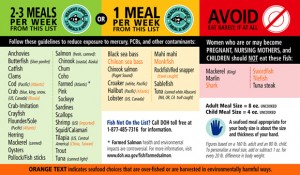
- Take it easy on the fish. Fish is not as healthy as it was back in Paleo times. There were no coal plants omitting mercury and other contaminants into our oceans, rivers, and lakes. Contaminants were much, much lower (perhaps non-existent?). Keep the fish, especially the large ones like tuna, to once a month. Smaller fish can be consumed by some individuals once a week. Check out the fish chart below.
- Ditch the canola oil. It’s not the same as olive oil.
- Dairy fats are needed, especially butter. The arachiodonic acid (AA) is necessary for neurological development and health, as well as hormone production, and even necessary to properly deal with inflammation. Though you can get these fats from red meat, it’s much harder to do, especially if you’re getting the leaner, healthier grass-fed beef.
- Salt, in the form of sea salt, should be considered, especially when sweat rates are higher – hot summer days and with prolonged exercise. Healthy diets, devoid of canned food and fast food (where most humans get their salt), can often be deficient in sodium chloride.
- How about grains and other starches? That should depend on your exercise rate and how you feel eating them. Sweet potatoes and possibly even regular potatoes may be advised if you feel you metabolize them well. You can certainly be very healthy without these in your diet, and they should not be consumed every day. Corn, rice, and other non-gluten containing foods should be based off your individual need and preference. Though you can’t call yourself a true Caveman or Cavewoman, pay attention to how you feel when you eat a certain food.
Adjust the diet to your individual needs and habits. More calories should come from fats (avocados, eggs, nuts, seeds, coconut, butter) and less from carbohydrates (fruits, potatoes, honey) if your exercise levels are low. The opposite holds true if exercise is more intense and of long duration. More on specific guidelines at the SockDoc site.
Off you go to eat your meat and veggies!


I’ve been a vegan for a few years and am thinking about trying your two week test, but was wondering why you suggest eating dairy if the paleo diet eliminates it? Thanks in advance for your time.
Alyssa
That’s what I call it a “Paleo-Type” diet. I feel as though the fats in the dairy are necessary – specifically the arachidonic acid.
Thanks!
I find that I feel best with a diet of the quality meats, dairy (full fat), olive oil, unrefined coconut oil, grass-fed butter, lots of veggies, potatoes and brown rice. Many grains (other than the brown rice) will make me feel “heavy”, and gluten is the worst. I will bloat like crazy with glutens, start getting sick/feeling sick more, get more aches and pains (particularly my sciatica). I also noticed that I need to take in probiotics daily if eating gluten, but don’t need them that often without the gluten. Do these modern glutens do some kind of harm to those micro-organisms? Or could it be that when I eat glutens, something else in my diet has shifted that doesn’t help them keep their numbers up? I definitely notice a big health boost all around when I am “gut-healthy”.
Yes – check out this article too: https://drgangemi.com/2012/06/fiber-gut-health/